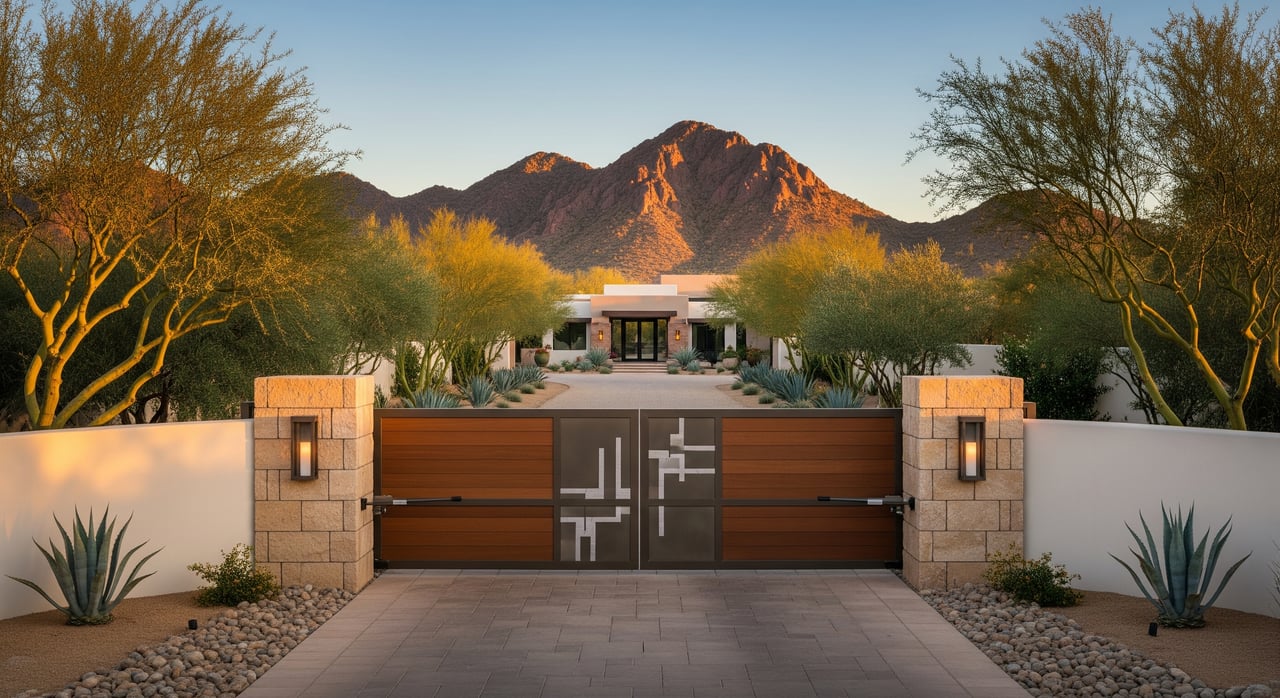
Gated vs Non Gated Living in Paradise Valley 85253
January 15, 2026
January 15, 2026
Thinking about a gated address in Paradise Valley or wondering if a non-gated estate on a wide, quiet street is the better fit? In 85253, both options are highly desirable, and both come with tradeoffs in privacy, access, costs, and resale. You want the setting that fits your routines now and protects your investment later. This guide breaks down what changes day to day, what to look for in HOA documents, how emergency access works, and what to expect when it is time to sell. Let’s dive in.
Paradise Valley is known for large lots, estate-scale homes, and a mix of gated enclaves and non-gated streets. Some gates serve an entire community, while others protect a single private driveway. Many coveted homes sit on non-gated streets or private drives without a shared gate.
Public streets are maintained by the town or county and allow open access. Private roads are commonly found inside gated enclaves or as shared drives, and the adjoining owners or HOA handle maintenance. That difference affects your fees, your responsibilities, and how guests and service providers reach your home.
Typical buyers here include move-up primary residents, second-home and lock-and-leave owners, and luxury buyers who value privacy. Your best fit depends on how much structure you want from community rules and how much friction you are willing to manage for daily access.
Gated entrances reduce casual traffic and increase privacy. They can deter opportunistic incidents like drive-through theft or porch piracy. That said, a gate does not make a property immune to crime. Real security depends on gate design, whether it is staffed or monitored, and how policies are enforced.
On non-gated estate streets, long setbacks, mature landscaping, and private drives can deliver privacy similar to a gate. If you prefer the feel of an open neighborhood without visitor check-ins or codes, a non-gated property may offer the right balance.
Fire and municipal codes require unobstructed emergency access. In the Phoenix area, community gates typically must include an approved emergency access method such as a Knox box, radio receiver, or automatic opening system. Before you buy, confirm what system is installed and whether it is tested and maintained by the HOA or owner.
Gate malfunctions that block responders can create liability risk for a gate owner or HOA. Ask for maintenance records and clarify who is responsible for service contracts, inspections, and any backup power.
A gate adds steps for visitors, deliveries, contractors, and even internet or utility technicians. Some providers will not enter without authorization or a code, and a few may not enter at all. Trash service may require placing bins at a gate, and postal delivery could use cluster boxes if carrier access is limited.
In a non-gated setting, spontaneous visits and service calls are usually simpler. If you host frequent gatherings or rely on routine contractor access, factor the extra coordination time a gate can add.
Many gated enclaves in Paradise Valley have HOAs that manage the gate, private roads, landscaping, and common areas. Non-gated areas can also have HOAs, though many large-lot estates are outside HOA control. If there is an HOA, it will have CC&Rs, bylaws, and rules that shape daily life.
Expect HOA dues in gated communities to cover gate operation, common-area maintenance, and sometimes security contracts. Costs vary by community size, staffing, and whether roads are private. Ask if there is a recent reserve study and whether reserves are adequate for big-ticket items like gate equipment or road resurfacing. Thin reserves can lead to special assessments.
Rules to review include guest and parking policies, rental restrictions, landscape and exterior approvals, and any standards for cameras or recording devices. Arizona is a one-party consent state for audio recordings, so communities typically use video without audio and rely on signage and policies to avoid privacy issues.
Road status matters. If your street is public, the town or county maintains it and there is no private access control. If your street or drive is private, you and your neighbors or your HOA usually pay for upkeep, resurfacing, drainage, and any needed repairs.
Private road costs can be steady or cyclical, with larger resurfacing projects scheduled every several years. Verify if there is a recorded maintenance agreement and how costs are shared. If reserves are low, budget for potential special assessments.
Community gates require upfront and ongoing investment. Typical budget items include entrance masonry, gate operators, intercoms, lighting, cameras, and landscaping. Ongoing costs may include electricity, repairs, cloud storage for camera footage, telecom and maintenance contracts, and guard or concierge staffing if applicable.
For single-home driveway gates, costs are smaller in scale but still include installation, electrical work, and periodic maintenance. Confirm any local permit requirements and emergency access compliance.
Gated properties offer strong curb appeal for buyers who prioritize privacy and a sense of exclusivity. They can be especially attractive to second-home owners who value lock-and-leave convenience and monitored environments. The tradeoff is limited drive-by exposure, extra steps for showings, and a smaller buyer pool that is comfortable with HOA rules and fees.
Expect showings in gated communities to require advance notice, gate codes, or guard verification. Some HOAs restrict lockboxes or open houses, which means buyers will mostly see your home by appointment. Clear showing instructions and scheduled open house windows help reduce friction.
Non-gated homes are easier for casual drive-bys and impromptu showings, which can speed momentum when your listing first hits the market. If you are reselling, highlight the benefits your property provides that buyers value most in Paradise Valley, such as acreage, views, indoor-outdoor living, and proximity to daily services.
If you are a lock-and-leave or seasonal owner, a gated community with defined access rules, remote monitoring, or on-site staffing may align with your priorities. Confirm how packages and trash are handled and whether the HOA coordinates exterior standards for low-maintenance living.
If you are a primary resident focused on daily routines, a non-gated street may offer smoother school commutes, easier social access, and simpler visitor parking. You can still achieve privacy with lot size, setbacks, and thoughtful landscaping.
If resale flexibility is key, consider how HOA dues, rules, and access steps might narrow your buyer pool. The right listing strategy can offset those limitations by focusing on presentation, clear instructions, and documented HOA health.
Use this list to frame your due diligence in 85253:
If you are selling inside a gated enclave, showcase the privacy, controlled access, and any security or concierge benefits. Provide buyers with a clear summary of HOA reserves, gate maintenance history, and straightforward showing instructions. Schedule defined showing windows and coordinate with gate management to simplify access.
If you are selling a non-gated estate, lean into convenience, lot size, and the ease of visits and services. Strong presentation is essential in both cases. Many sellers benefit from fronted improvements, staging, and polished marketing to capture attention fast and justify top-of-market pricing.
With the right plan, you can minimize friction and maximize appeal. Stephanie can leverage a presentation-first approach, including Compass Concierge for approved preparation and staging, to launch your listing with confidence and speed.
Ready to weigh the tradeoffs for your lifestyle and long-term goals in Paradise Valley? Reach out to schedule a friendly, no-pressure strategy call with Stephanie Pisoni. You will get a clear plan tailored to 85253, whether you lean gated or non-gated.
Get assistance in determining current property value, crafting a competitive offer, writing and negotiating a contract, and much more. Contact me today.