North Scottsdale NAOS Design for Desert Uplands Views
October 16, 2025
October 16, 2025
Looking at a Scottsdale desert uplands home and wondering how to capture those McDowell views without running into NAOS rules? You are not alone. Buyers and owners in the uplands juggle stunning scenery, strict protections, and real design constraints. In this guide, you will learn how NAOS and the Environmentally Sensitive Lands Overlay work, what to verify before you build or remodel, and practical ways to frame views while staying compliant. Let’s dive in.
Environmentally Sensitive Lands Overlay (ESL) is Scottsdale’s framework that protects sensitive desert and mountain areas through limits on disturbance and special design standards. It drives how much land must remain natural and what you can build. You can review the city’s overview of ESL and NAOS requirements on the official site for the Environmentally Sensitive Lands Overlay.
Natural Area Open Space (NAOS) is a deed-restricted easement on a lot or within a subdivision that preserves native desert, boulders, washes, and wildlife corridors. Within dedicated NAOS, grading, clearing, and excavation are prohibited except where the ordinance specifically allows it. NAOS remains privately owned, but the easement controls how it is used under the ESL.
NAOS dedication amounts vary by landform and slope. As a general guide, Lower Desert lots often require about 20 to 30 percent, Upper Desert can range higher, and hillside categories require more. The exact percentage is site specific. Always confirm your property’s ESL designation and slope category in the ESL resources.
Most uplands lots include a defined construction envelope. Your house, pool, major grading, and most improvements must stay within that envelope, with NAOS protected outside it. During construction, NAOS areas must be identified and fenced off. You can find construction envelope and protection standards in Scottsdale’s zoning section on Design Standards §6.1070.
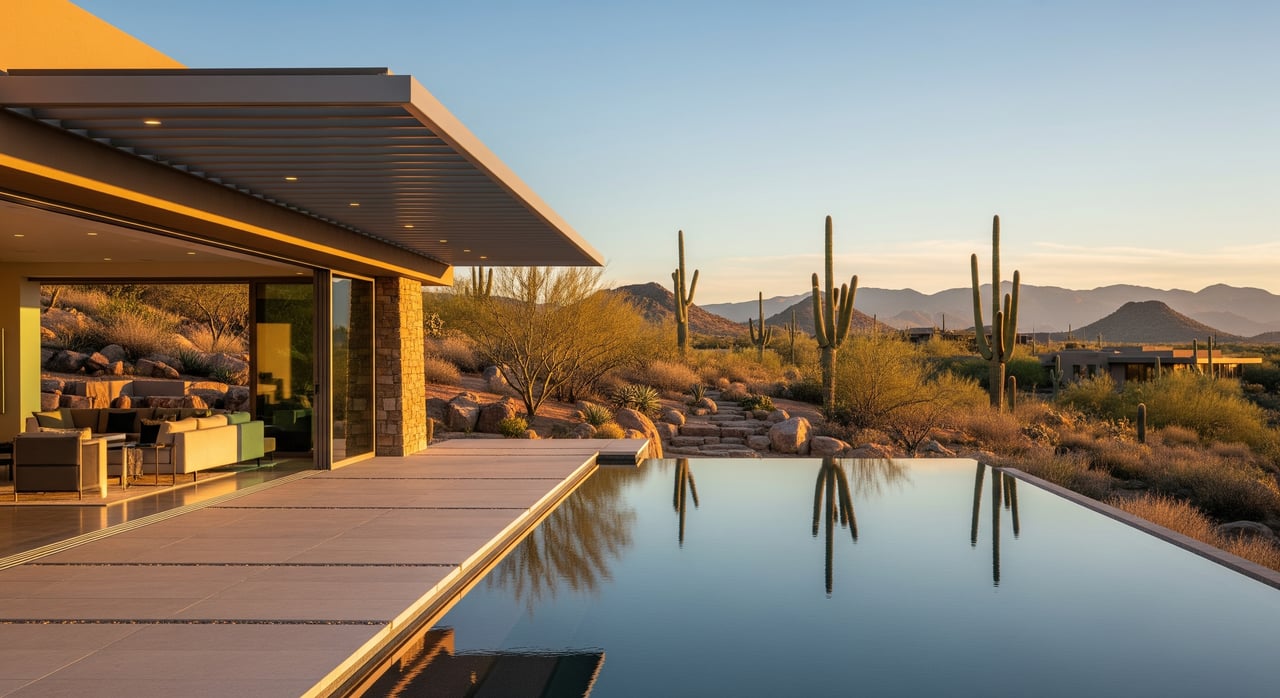
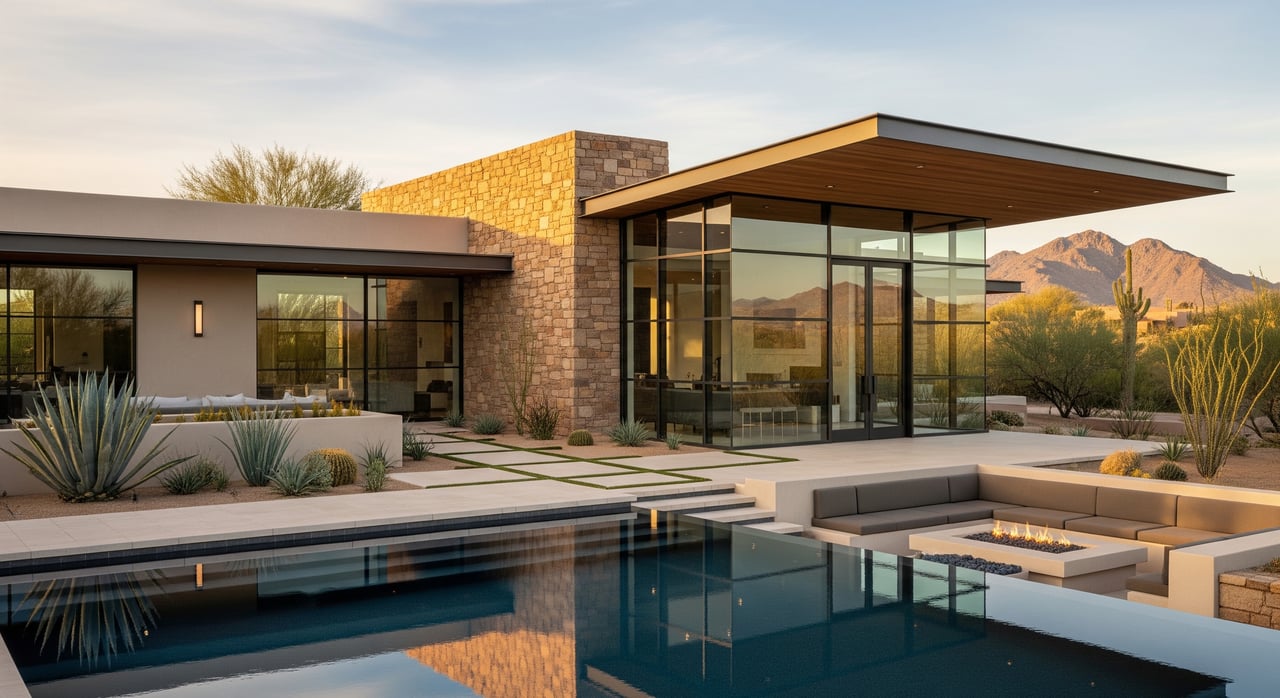
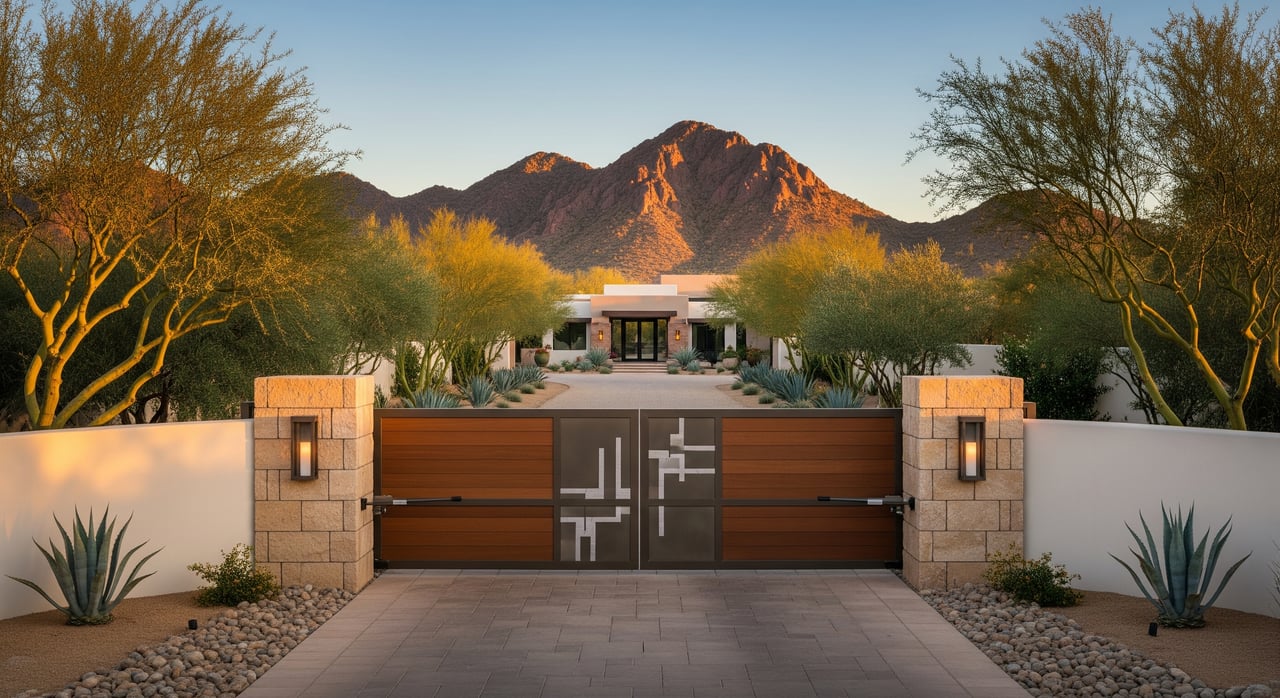
Position your main living areas and outdoor spaces within the construction envelope facing the strongest views. In many Scottsdale uplands neighborhoods, mountain views trend to the north and northeast toward the McDowell Sonoran Preserve, which also helps with comfort because north-facing glass reduces direct summer heat gain.
Cluster building mass, driveways, and utilities to minimize disturbance. Where terrain is sensitive or steep, consider minimal-footprint foundations, piers, or carefully placed cantilevers that reduce grading. These approaches align with the city’s intent to minimize reshaping of natural drainage and landforms described in §6.1070.
To balance views and comfort, prioritize north-facing glazing for mountain panoramas and daylight with lower heat gain. Limit or heavily shade east and west glass, since those orientations overheat in summer. For deeper comfort, use overhangs or adjustable shading. The U.S. Department of Energy explains these passive solar basics in its guide to passive solar homes.
You can “borrow” the NAOS landscape without touching it. Keep foreground native plants intact, then use low-profile terraces and native rockscape to blend the immediate yard into the protected desert. Where fences are needed, choose low or transparent options and be mindful that anything near natural watercourses must meet city standards administered under the ESL framework.
Choose indigenous and desert-appropriate species that match Scottsdale’s desert character and support habitat. The city publishes an Indigenous Plant List that can guide revegetation and NAOS enhancement.
Planning a turf removal or irrigation upgrade? Scottsdale Water offers residential rebates for smart controllers, turf conversion, and more, often with pre-approval requirements. Explore current programs on the city’s page for water conservation rebates.
NAOS maintenance is limited. Routine trimming, grading, or plant removal is restricted, and maintenance usually focuses on debris removal and invasive species control. HOAs often help manage these areas, but the ordinance rules apply regardless. For a practical overview of owner and HOA responsibilities, see this community guide to Natural Area Open Space.
Wildfire awareness matters in the uplands. Scottsdale Fire encourages defensible space near structures and removal of invasive plants that add fuel. Any work within NAOS may require review under ESL, so coordinate early with city and fire officials. Learn more in the city’s wildfire prevention guidance.
Designing for views in Scottsdale’s desert uplands is a balance of architecture, comfort, and stewardship. With the right plan, you can frame mountain vistas, protect NAOS, and create a low-maintenance landscape that fits the ESL. If you want a property or design strategy that checks all these boxes, connect with Stephanie Pisoni for local guidance tailored to your goals.
Get assistance in determining current property value, crafting a competitive offer, writing and negotiating a contract, and much more. Contact me today.